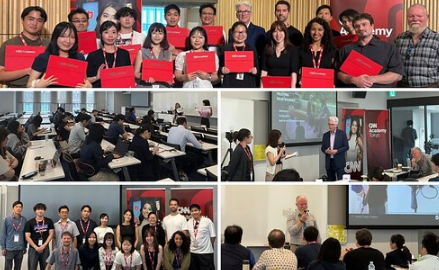
ExecutiveChronicles | Ways to Train Your Employees and Increase Productivity | In the fast-paced world of business, training your employees effectively can make all the difference between stagnation and growth. A well-trained workforce not only possesses the skills and knowledge needed to excel but also contributes significantly to increased productivity. This article will explore various strategies and methods to train your employees for enhanced productivity.
1. Customised Training Programs
One of the most effective ways to train employees is through customized training programs tailored to their specific roles and responsibilities within the organization. While generic training may provide a baseline understanding, personalized programs can ensure that employees receive training that is directly relevant to their job functions.
For example, a sales team might benefit from specialized sales techniques and product knowledge training, while the IT department might require cybersecurity and software-specific training. Similarly, consultants in quality management systems, managers in different industries like manufacturing or automotive, or individuals who want to advance their careers can take an ISO 9001 online course to achieve their career goals. By tailoring training content and delivery to individual needs, you can optimize the impact of your training efforts.
2. Interactive Workshops and Seminars
Interactive workshops and seminars offer employees hands-on learning experiences that can be invaluable for skill development and productivity enhancement. These sessions provide opportunities for employees to apply their knowledge in practical scenarios, creating a better understanding of the material.
For instance, conducting a workshop on effective project management can equip employees with the skills necessary to handle complex projects efficiently. Additionally, seminars featuring guest speakers or industry experts can provide fresh perspectives and insights that stimulate creativity and innovation within your organization.
3. Online Learning Resources
In today’s digital age, online learning resources have become indispensable tools for employee training. These resources, including e-learning modules, webinars, and video tutorials, offer the flexibility for employees to acquire new knowledge and skills at their own pace and convenience.
Online learning platforms often include assessment tools that allow organizations to track employees’ progress and comprehension, facilitating continuous improvement in training effectiveness. Whether it’s providing remote access for geographically dispersed teams or enabling self-paced learning, online resources are a crucial component of modern employee training.
4. Mentorship Programs
Mentorship programs establish a valuable support system within your organization. By pairing experienced employees with newer team members, organizations facilitate the transfer of tacit knowledge that can be challenging to convey through formal training.
Mentorship programs not only accelerate skill development but also foster a sense of camaraderie within the workplace. They provide mentees with guidance and support as they navigate their roles and responsibilities, ultimately contributing to higher job satisfaction and increased productivity.
5. Gamified Learning
Gamified learning is a cutting-edge approach that incorporates elements of game design into the learning process. By turning training into an engaging and enjoyable experience, organizations can boost employee motivation and participation.
Gamification can take various forms, including quizzes, challenges, leaderboards, and rewards systems. These elements tap into the natural human desire for competition and achievement, encouraging employees to engage in their training and strive for excellence actively.
6. Continuous Feedback and Improvement
A culture of continuous feedback and improvement is essential for effective employee training. Regularly soliciting input from employees regarding their training experiences allows organizations to fine-tune their programs to meet evolving needs and preferences.
Feedback mechanisms can take various forms, such as surveys, focus groups, or one-on-one discussions. By actively listening to employees’ input, organizations can make informed decisions to enhance training content and delivery methods, ultimately increasing the training’s effectiveness.
7. Blended Learning Solutions
Blended learning solutions offer a balanced approach that combines traditional in-person training with digital resources. This approach provides flexibility in terms of when and how employees access training materials, accommodating different learning styles and preferences.
A blended learning program might involve a combination of in-person workshops, online modules, virtual simulations, and self-paced learning. This comprehensive approach ensures that employees have opportunities for both face-to-face interaction with instructors and peers and the convenience of accessing digital resources.
8. Mobile Accessibility
In today’s mobile-centric world, ensuring that training materials and resources are accessible on mobile devices is crucial. Mobile accessibility empowers employees to learn on the go, making the most of their time, whether they are commuting, traveling, or simply taking a break.
By making training materials available on smartphones and tablets, organizations allow employees to engage in learning whenever and wherever it suits them, enhancing overall productivity.
9. Performance Metrics
To measure the impact of training on productivity, organizations should establish clear performance metrics. These metrics may include key performance indicators (KPIs) related to employee performance, efficiency, error rates, and other relevant factors.
By comparing these metrics before and after training, organizations can assess the effectiveness of their training programs and identify areas that require further improvement. Data-driven insights help refine training strategies to maximize their impact.
10. Encourage Self-Directed Learning
Promoting self-directed learning empowers employees to take ownership of their development. Provide them with the tools, resources, and encouragement to explore areas of interest and acquire skills that align with their career goals.
Self-directed learning can involve pursuing certifications, attending industry conferences, conducting personal research and development, or simply seeking out learning opportunities independently. Fostering a culture of self-directed learning helps employees stay updated on industry trends and continuously improve their skill sets.
11. Recognition and Rewards
Recognizing and rewarding employees who demonstrate exceptional skills and increased productivity because of their training efforts can be a powerful motivator. Acknowledging and celebrating achievements not only boosts individual morale but also sets a positive example for others to follow.
Recognition can take various forms, including certificates, promotions, bonuses, or public praise within the organization. These incentives encourage employees to actively engage in training and strive for excellence in their roles.
In conclusion, training employees and increasing productivity go hand in hand. To achieve both objectives effectively, organizations should adopt a multifaceted approach that includes customized training programs, interactive methods, online resources, mentorship, gamification, continuous feedback, blended learning solutions, mobile accessibility, performance metrics, self-directed learning, and recognition and rewards. By investing in employee development, organizations can create a skilled and motivated workforce that contributes to their long-term success in a competitive business landscape.